
What Can 100 Portraits Teach the Marketing World?
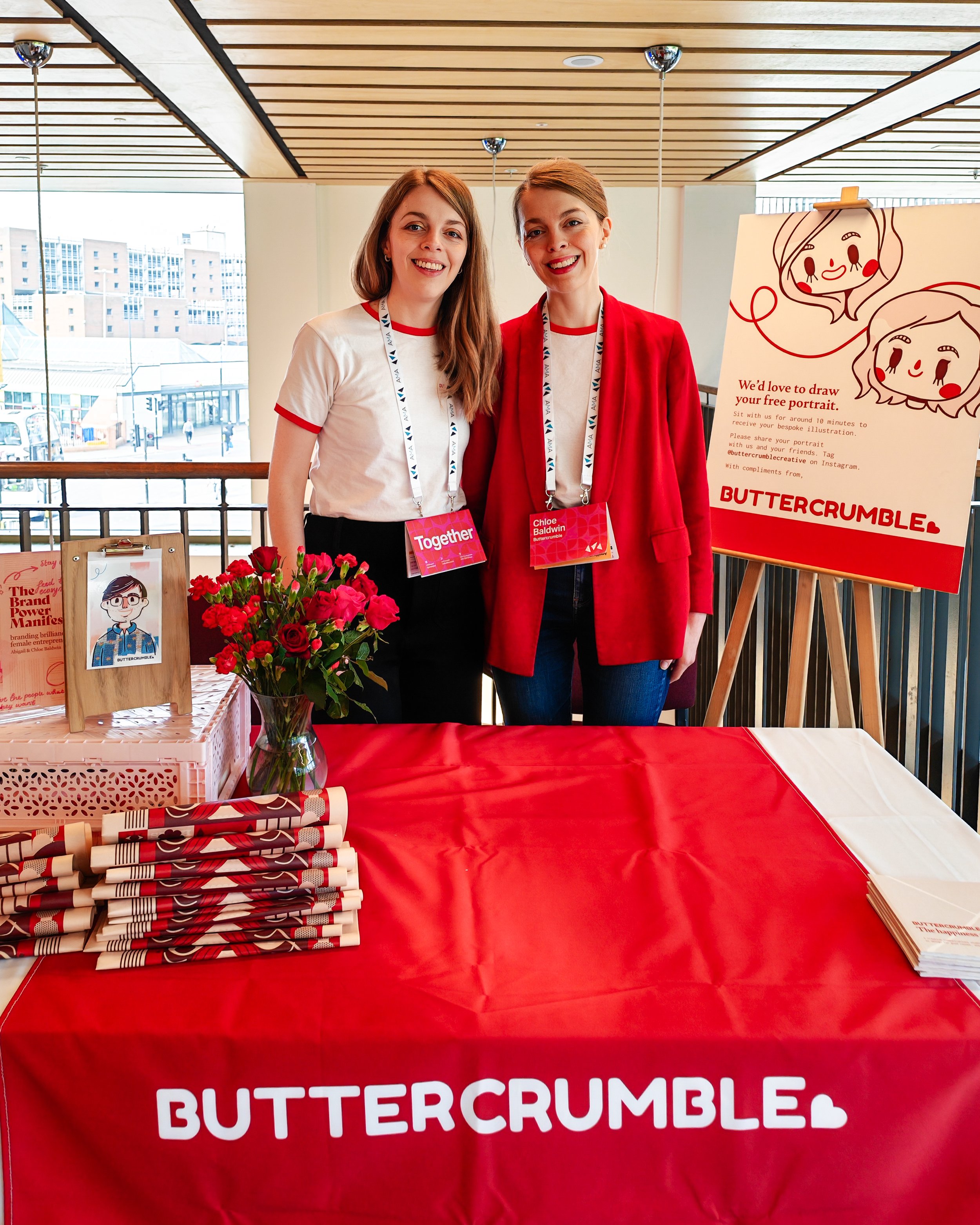
Over two days, Buttercrumble’s founders, Chloe and Abigail, created more than 100 individual, bespoke hand-drawn portraits – a real novelty in our world full of algorithms, AI and automation.
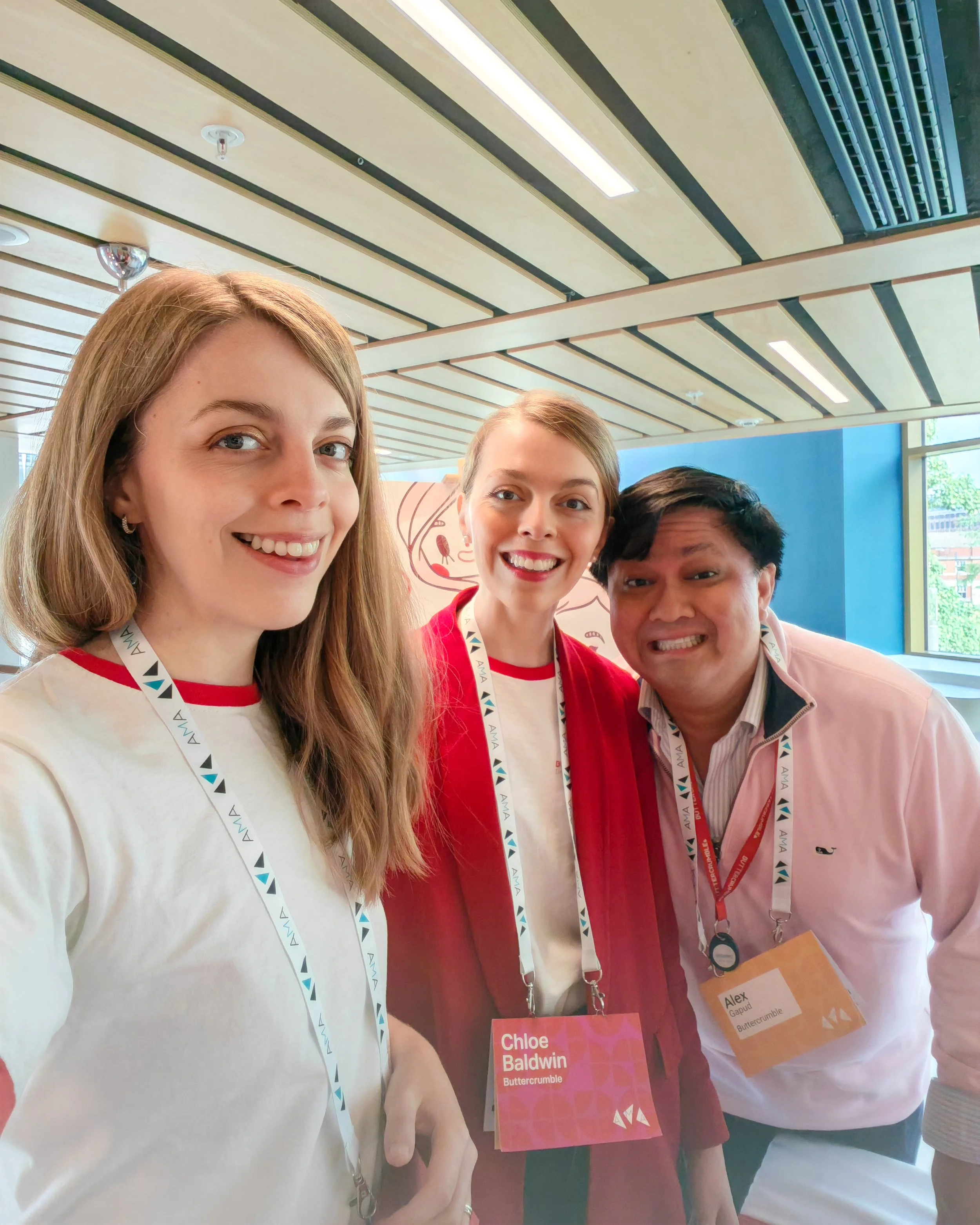
This was as part of the AMA Conference. It’s the UK's biggest conference for the arts and heritage marketing community, which we're proud to be a part of. We love partnering with cultural organisations. It was wonderful to meet new faces and reconnect with familiar ones.
Each portrait drawn took time, attention and genuine human interaction, from conversations about fried chicken, deep-fried Mars bars, how gutted many of us were about the England (World Cup) result (except our Scottish friends) or consoling Northerners who have moved down South.
In many ways, the interactions at our stand reflected a much wider challenge discussed throughout the conference and on the minds of many attendees: audiences don’t want to feel like segments, data points, personas or targets. They want to feel recognised as individuals and want to feel part of a human community.
As our Community Manager, Dr Alex always says about his training as an anthropologist,
“Numbers have faces, statistics have stories”.
We need to remember that the numbers don’t tell the whole story. They don’t capture what an experience feels like and how people sense and perceive their world.
That idea came up again and again throughout the conference and shaped many of our reflections…
Above: all 100 portraits drawn at the conference.
Maybe the problem isn’t engagement
Or at least “engagement” as defined and measured by metrics and numbers. Marketeers - especially those at bigger organisations - have an abundance of metrics, dashboards and data. But the numbers alone don’t tell us why people care, connect or come back to our venues or experiences.
Beyond numbers, we need to ask what the quality of their engagement is. Are we really creating genuine relationships and communities where people feel valued and included?
There’s both a need and an opportunity to rebalance arts marketing with a qualitative, human-first understanding of audiences. We need to ask ourselves critical questions such as:
Are followers actually audiences?
Do impressions really equal awareness?
Is reach actually impact?
Does automation and the use of AI actually threaten to undermine connection, trust and belonging?
Tech scales reach, not trust
The arts sector’s greatest strength may in fact be the one thing AI can’t fully recreate: human creativity, empathy, connection and shared experience. And it can’t take responsibility for relationships precisely because it’s not human.
The things that matter to people (community, belonging, creativity, a sense of personal connection and relationship, and ultimately, trust) are grounded in human experiences and emotions.
As and when we use tech and AI, we need to remember that the tech isn’t at the other end of the ‘solution’ — human beings are. There’s a real danger that AI and other technologies lead us to overlook the value of human relationships and their beautiful complexity.
IRL still matters
We’re probably dating ourselves as millennials talking about IRL, but although there’s value in digital formats to boost access and reach, in-person interactions still matter.
The buzz and energy in the venue, the knowledge and experience sharing, the serendipitous connections and tidbits that leak out in in-person interactions are never fully captured in digital-only formats. While the AMA itself is proof that you can have a successful remote-based organisation, there’s a 3D element that comes together when people physically gather and connect off-screen.
Digital channels and formats can extend our reach, but meaningful relationships are often built in moments that don’t scale: conversations, shared experiences, laughter and genuine human connection.
The future of arts marketing isn’t a choice between humans and technology. It’s remembering that technology and the tasks it enables should serve human relationships, not try to replace them.
Over two days, Chloe and Abigail drew more than 100 portraits, each different because each person drawn was different. Perhaps that’s the simplest lesson to take away from the conference: audiences aren’t metrics, segments or personas – they’re real people. And people need to remain at the heart of what we do.
We’re grateful for the opportunity to partner with the AMA and meet so many creative, resourceful, adaptable and resilient marketeers. It was brilliant to chat to and illustrate so many of you,
We’d also love to hear from you if you attended the conference. What are your takeaways and what might you do differently as a result?