
Too Long, Didn't Read: Why Your Audience Isn't Engaging with Your Research
Travelling beyond the wall of text
The following article was written by Dr Alex Gapud, Buttercrumble’s academic community manager, exploring the mixture of research and design…
The irony of presenting this to you, via text, is not lost on us.
As academics and researchers, we’re very good at reading and writing walls of text. Of course, it makes sense, as they’re the modus operandi of sharing our research that we learned during our PhDs and the traditional currency of success and progression in academia.
For those of us in social sciences or the humanities in particular, we deal with journal articles, monographs and edited volumes all day long. For many of us, even our teaching outputs, our PowerPoints, are walls of text on a slide that students chronically complain about.
But let’s be honest with ourselves for a second. Just because we’re used to dealing with these walls of text doesn’t mean we particularly like or enjoy them. And just because we’re comfortable with them doesn’t mean they’re the best way for research to travel.
I’ve learned that research doesn’t create impact simply because it exists. It creates impact when it travels.
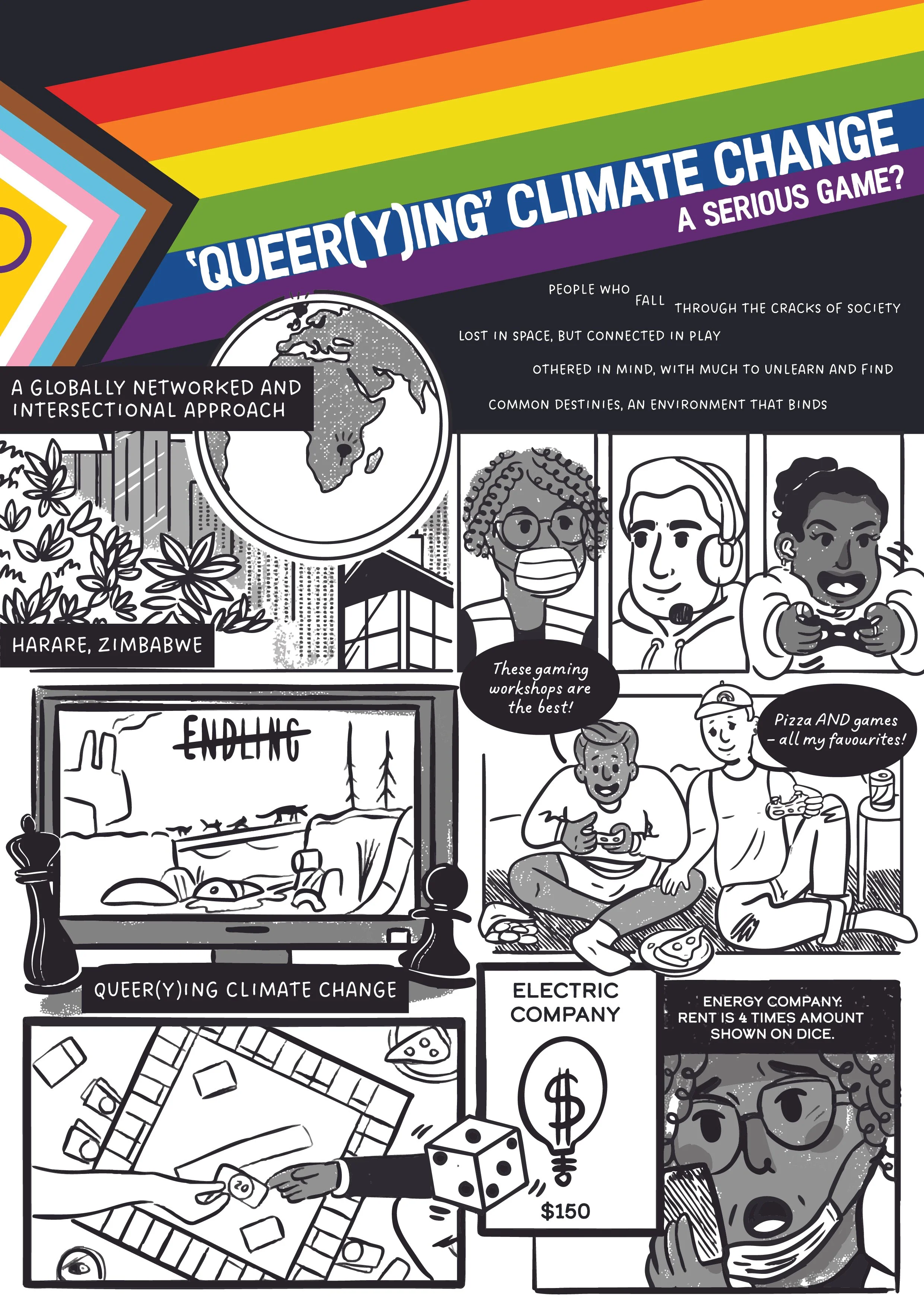
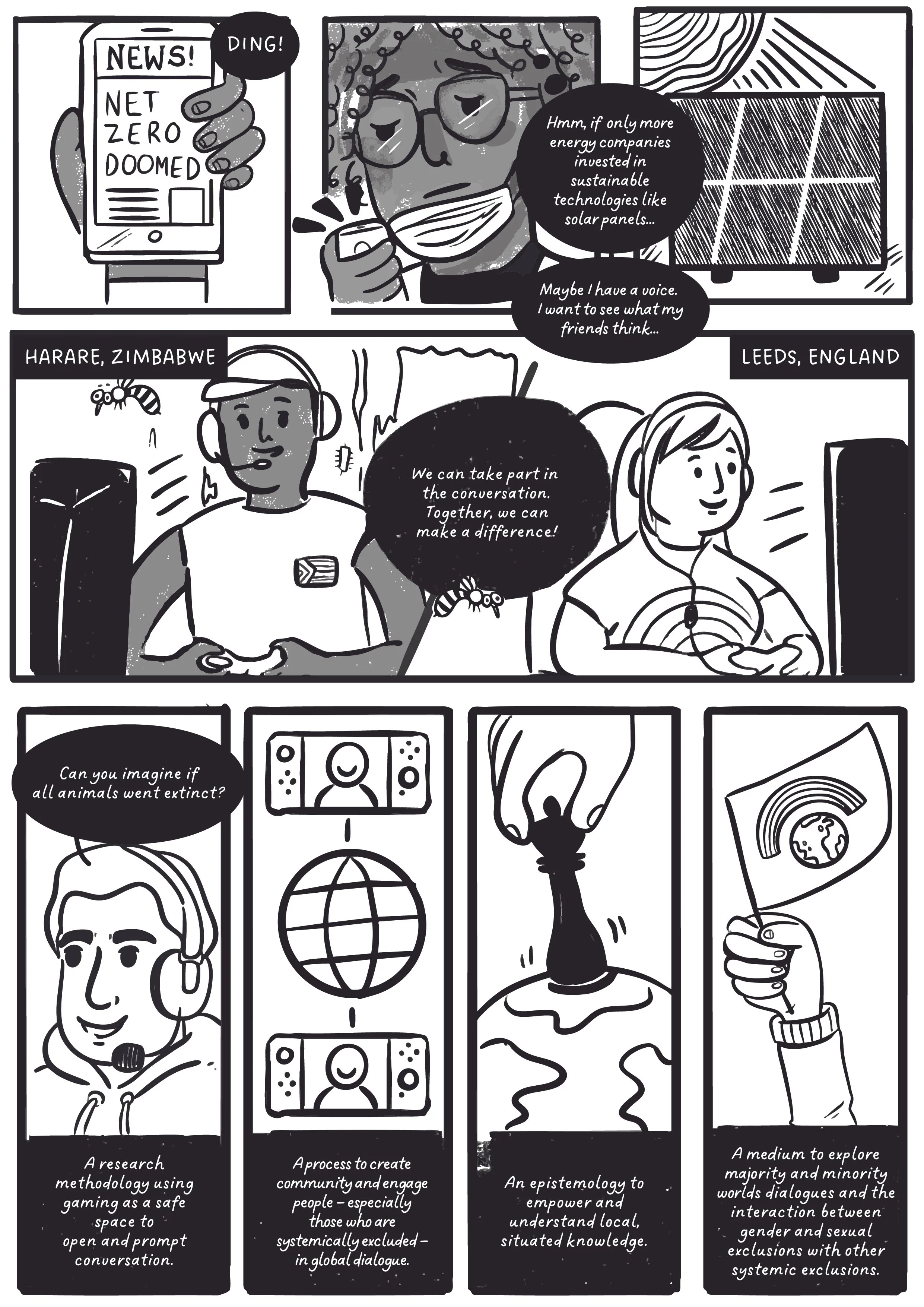
Above: Queer(y)ing Climate Change: A collaborative project led by Professor Martin Zebracki at the University of Leeds. It investigates how queer and marginalised communities experience environmental spaces and shape inclusive climate action. Buttercrumble created a comic strip to tell the story.
When I realised I was asking the wrong question
I’ll make a personal confession here. During my time in academia, I thought of non-academics’ disregard for our walls of text as a them problem, not a me problem.
In my defence, I always tried to write my manuscripts in a tone that was accessible rather than overly theoretical — so much so that Reviewer 2 for a manuscript said that my tone was almost too juvenile and not academic enough. I believed my work should be theoretically robust enough that a fellow expert in my area could get something out of it, but also accessible to first-year students who were intelligent but maybe not as theoretically or conceptually well-versed.
As an early career researcher, the message I got from Reviewer 2 was loud and clear: making my research accessible to a non-specialist audience wasn’t the point. The advice I got from well-meaning and established peers and feedback from academic job interviews reinforced what many of us in academia know: what gets you the job, security and progression is impressing other academics, not the wider public who can use our research to make real impact in the world through policy and practice and who, whether we think of it this way or not, often fund our research.
When reflecting on my academic training, one of its gaps was thinking about how to engage people beyond our disciplinary peers in our journals and conferences. I’ll confess that years ago, I assumed that if people weren’t engaging with the research, the problem was their willingness to engage rather than how we were presenting it.
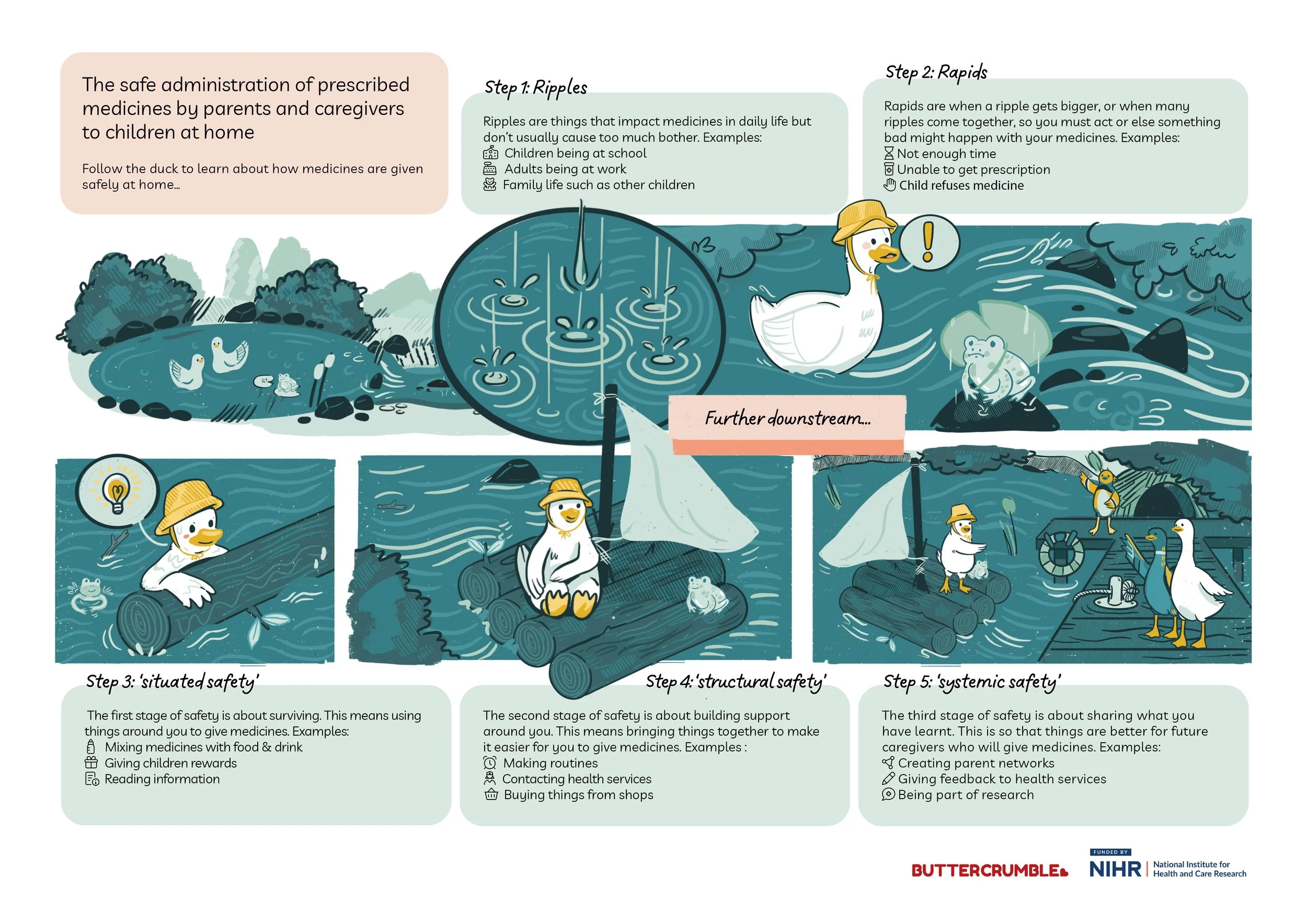
Above: Riding the Waves of Resilience, research by Stephen Morris. NIHR Doctoral Fellow at the University of Leeds and clinical pharmacist at Leeds Children's Hospital. Buttercrumble has produced a series of illustrations to communicate the research.
Taking audiences as they behave, not as we wish they did
After leaving academia and before joining Buttercrumble, I worked in consultancy around culture, employee experience and internal communications, where I learned that it was crucial that we met busy, time-poor audiences where they were. Through ethnographically exploring how people receive and interact with workplace communications, it became clear to me that while we in academia might be well-versed in navigating walls of text, the vast majority of people don’t seem to prefer them.
In my transition from an academic anthropologist to an applied one, I began to see the increasing importance of meeting audiences where they are, speaking in a language they understand and translating our findings rather than creating a detailed, nuanced wall of text that a busy leader won’t feel they have the time to read - even if they’re interested.
I began to stop asking how we get people to engage with research and started to ask how people engage with information in their everyday lives. Rightly or wrongly, people look for stories, conversations, videos, infographics, animations, social media posts and practical examples that are engaging and scannable.
What became clear was that people made very quick decisions about whether something was worth their time and attention. While an academic might skim abstracts, 100 words could already be too much for many people.
Of course, at first, I worried about diluting research, but learned over time that every piece of content we create can serve its own purpose, and we didn’t need each output to do everything.
Translation is how research travels
Translation is not the same thing as simplification. It’s the process of making ideas understandable and usable in a different context while retaining their integrity. The goal isn’t to remove nuance or rigour, but to ensure that people can engage with them in ways that are relevant to their needs and circumstances.
So there might be a full-text report for those who want the details, but we’d also produce a slide deck with a key infographic or two for key findings that we could speak to and explain. An animation or an interactive PDF could also be an engaging and useful way of helping people digest information.
Through this experience, I began to realise that translating research and helping it travel wasn’t a secondary activity that happened after the research was finished. It was a vital part of ensuring that research could actually reach the people who might benefit from it and equip them to do something meaningful with it in the world.
That realisation eventually led me to join the family team at Buttercrumble, where much of my work now focuses on helping researchers translate their findings and recommendations into language and formats that practitioners, policymakers and wider audiences can make sense of and engage with.
Over time, I’ve found a few simple questions and techniques that help researchers think beyond the journal article and design outputs that are more likely to reach and resonate with their intended audiences.
Alex’s top tips for helping research travel:
- Start with impact, not explanation
- Before creating any outputs, ask yourself:
- What do I want people to think?
- What do I want people to feel?
- What do I want people to do?
- These answers should shape the format, language and content.
- Pass the granny test
- Explain your research to someone outside your field (like your grandmother) in one or two sentences. If they understand what you’ve studied and why it matters, you’re probably on the right track. The goal isn’t to remove nuance; it’s to communicate relevance.
- One size doesn’t fit all! Design for the audience, not the article
- Different audiences need different outputs. A journal article could be right for fellow academics. A policymaker might need a two-page policy brief. A practitioner might benefit from an infographic. A community member could engage through a blog or an animation.
- Don’t simply retrofit a journal manuscript into another format. Start with your audience and build from there.
- Look for visual metaphors
- Many research projects contain concepts that can be visualised to tell a story. A journey, a bridge, an iceberg, an ecosystem, a funnel, cycle or a map can often communicate complex ideas much more quickly than a paragraph.
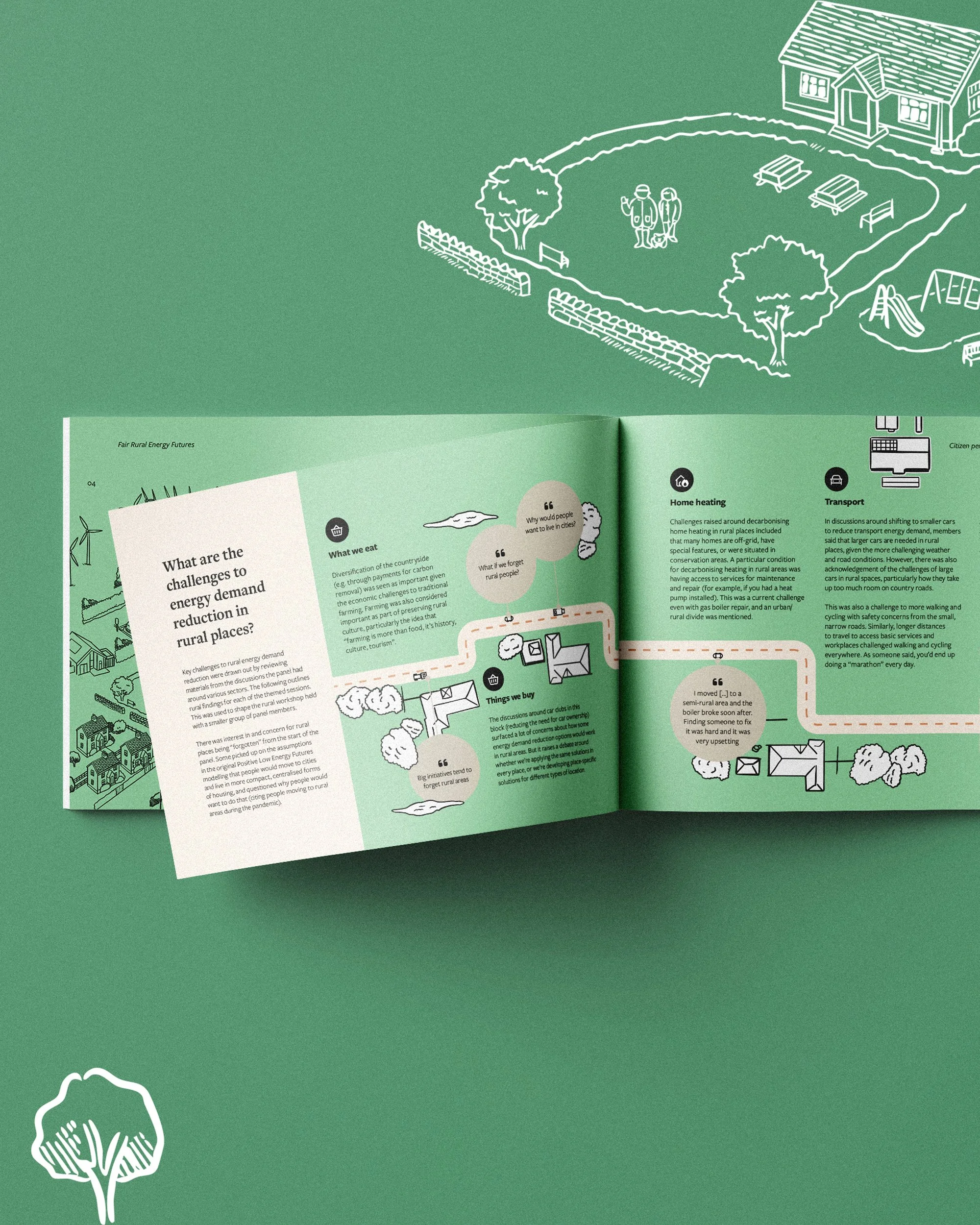
Above: a snapshot of a zine we produced for Reducing Rural Emissions, research by Dr Alice Garvey.
Rethinking the system
As long as publications for other academics are the predominant currency of success, we’re going to be torn between writing walls of text for each other and sharing our research in ways that are useful and meaningful for the wider public.
There’s a real tension in the system between who we’re accountable to, and ultimately, what our research and universities are for.
If research exists primarily to advance academic knowledge, then perhaps journal articles and monographs are enough.
But if research also exists to inform policy, improve practice, strengthen communities and contribute to public debate, then publication can’t be the end of the journey.
In other words, the challenge facing universities isn’t simply producing knowledge. It’s ensuring that knowledge can travel beyond the wall of text, beyond the conference hall or lecture theatre and beyond the University itself.
Because research only creates impact when it reaches the people who can use it.
Intrigued? Please follow our newsletter below for more news!