
More Than an Evaluation Report
Capturing student perspectives through facilitation, visual note-taking and a research zine
Universities invest significant time and resources into widening participation, student experience and research culture initiatives. Yet valuable insights often get condensed into a traditional report that only a small audience ever reads.
Just as importantly, findings aren’t always shared back with participants to demonstrate how their time, honesty and insights inform the project.
When a team at the Faculty of Arts, Humanities and Cultures at the University of Leeds approached Buttercrumble for support with the Research in Insights Opportunity (RIO), we saw a chance to do something different.
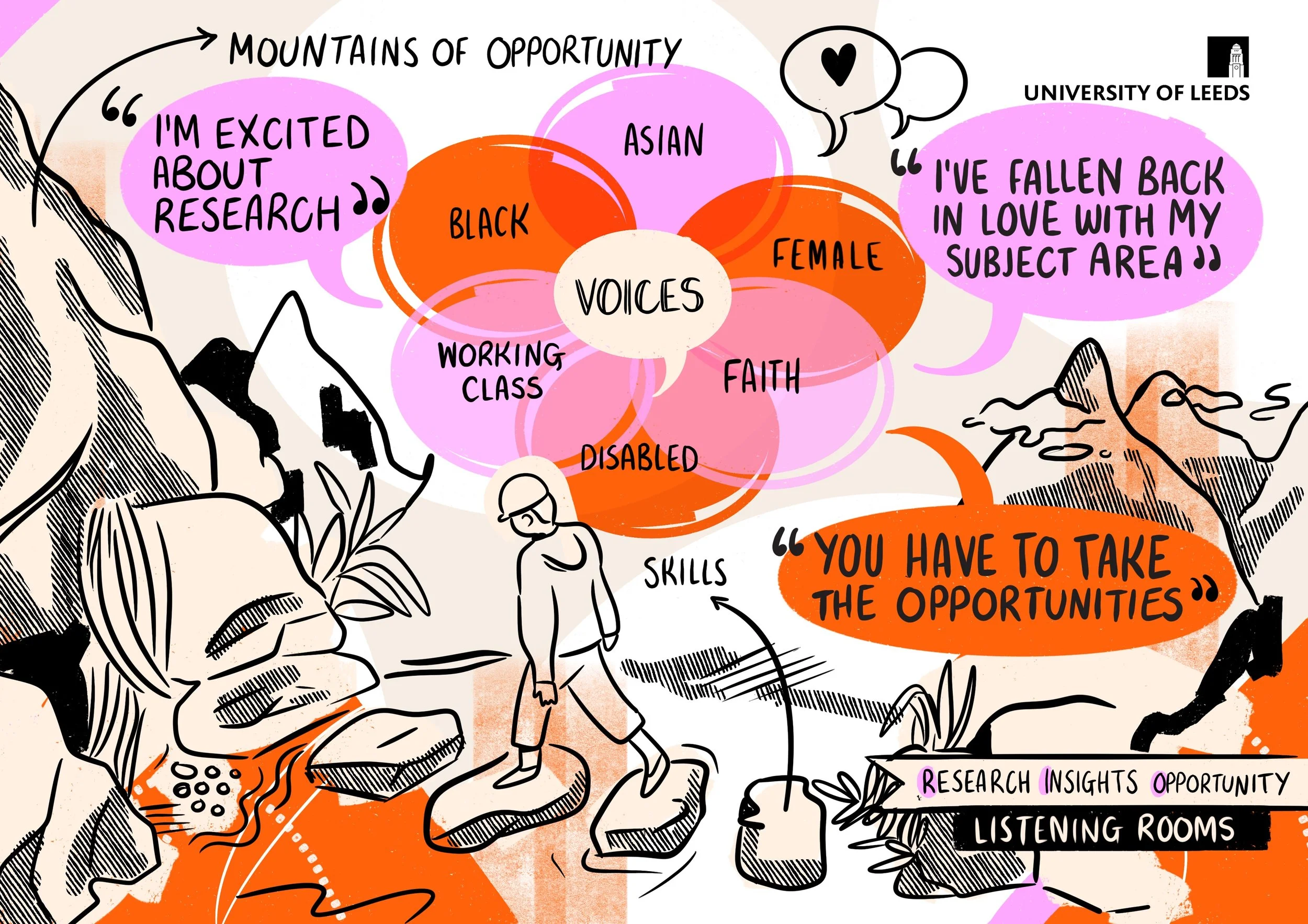
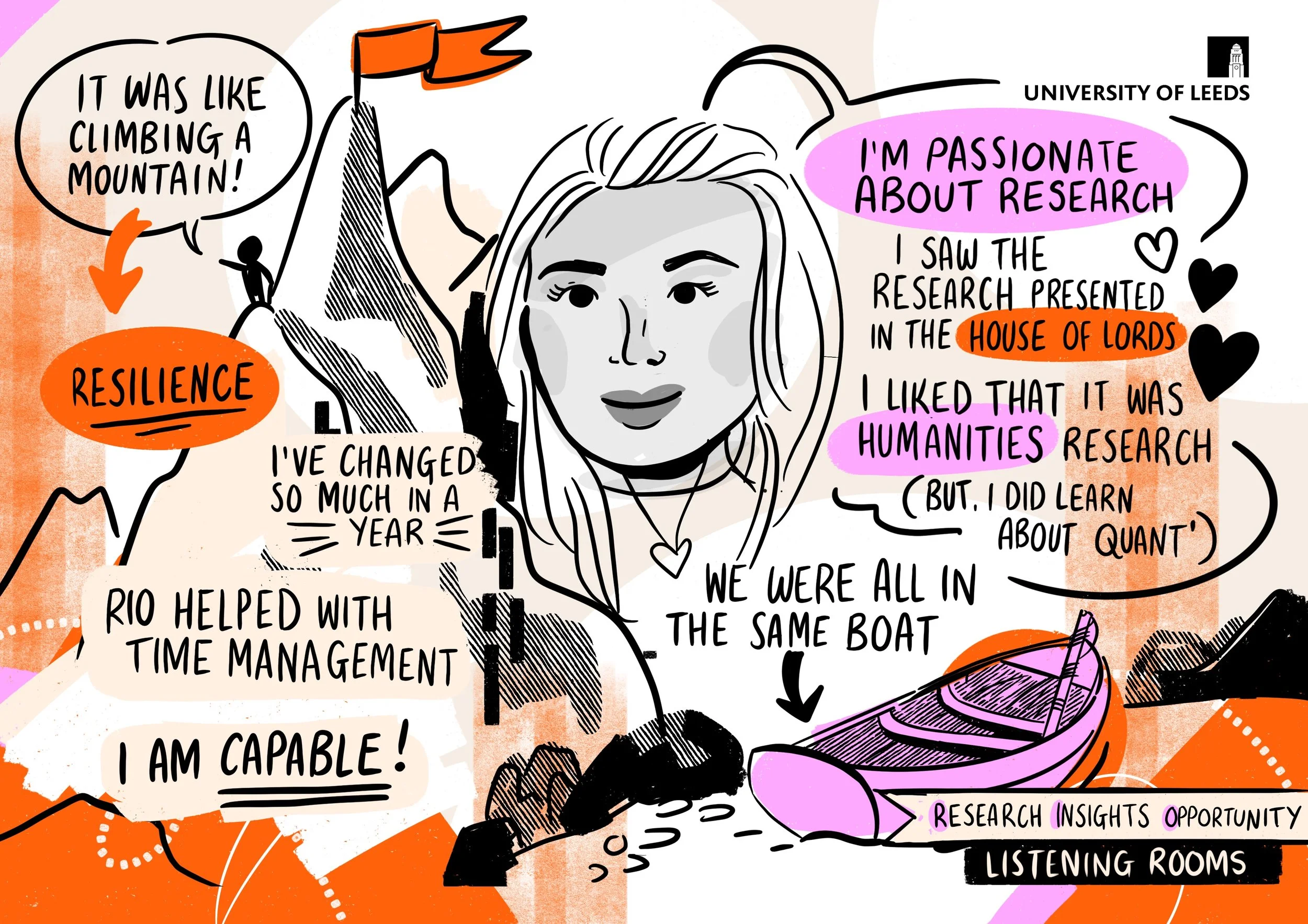
Above: a visual note illustration captured by Buttercrumble.
About the RIO programme
Funded by the University of Leeds’ Footsteps Fund, the RIO programme provided a dozen paid research placements, training workshops and mentoring for under-represented and disabled Level 2 (second-year) undergraduate students in the Arts and Humanities.
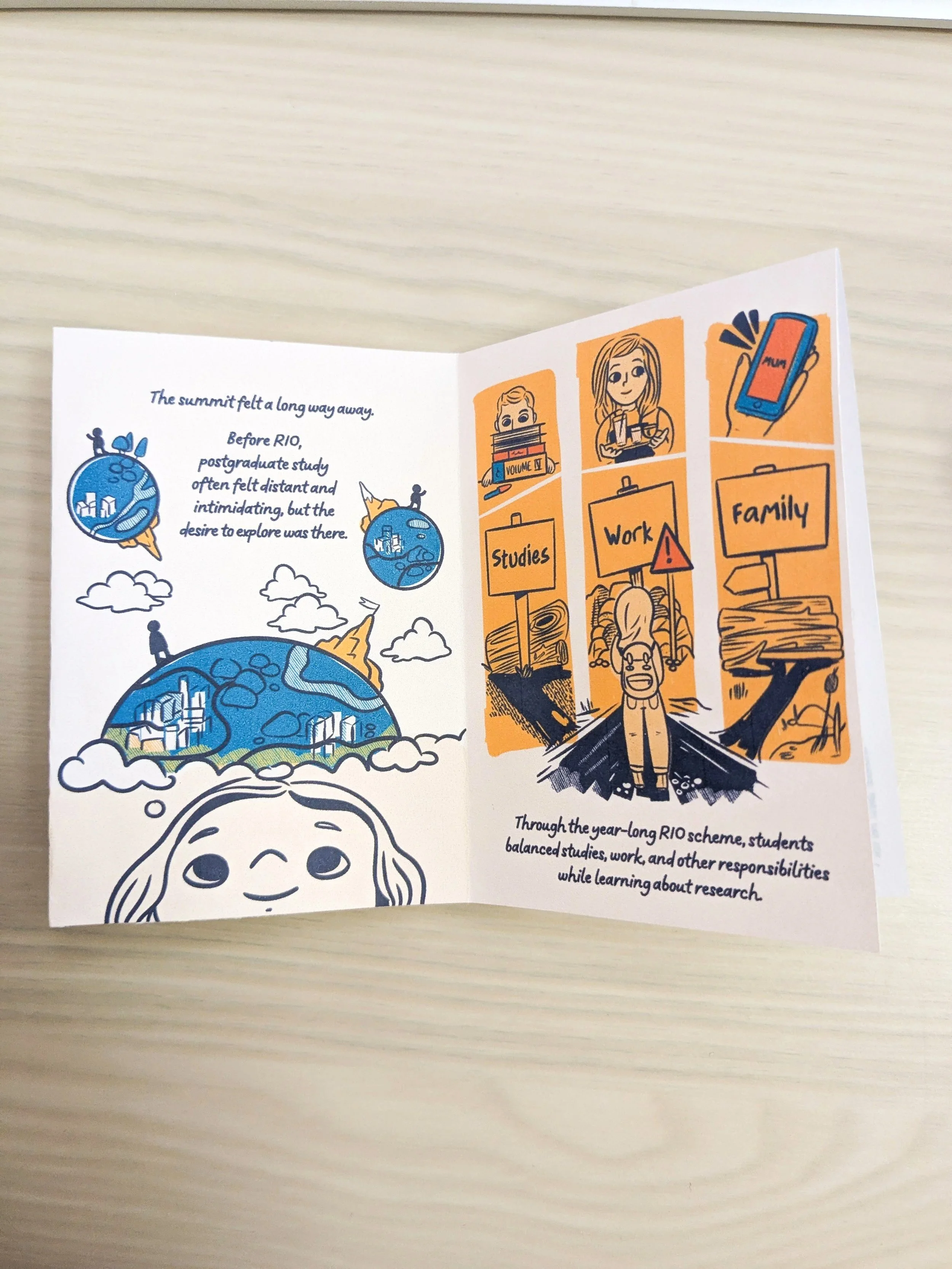
These placements were designed to help students explore opportunities, develop skills and confidence and navigate pathways into postgraduate study. Before the programme, many of the students were interested in postgraduate study, but faced barriers that made it feel out of reach. Students identified barriers including confidence, family and cultural expectations, a lack of visible role models and uncertainty about postgraduate application processes.
RIO at a glance
- Paid research placements
- Level 2 undergraduates in Arts, Humanities and Cultures
- Focus on under-represented and disabled students
- Provided research skills and mentoring
- Helped students navigate pathways into postgraduate study and careers
The challenge
The programme team wanted to understand participants’ experiences in depth while generating evidence to support future funding and programme development. They were keen to create outputs that celebrated participants while making key messages accessible to wider stakeholders and audiences.
Traditional evaluation reports can sometimes struggle to capture and communicate the richness of lived experience and often share findings in walls of text that aren’t always engaging.
Our approach
Stage one: Facilitated group discussions
Building on Buttercrumble’s collective expertise, we proposed a mixed approach that combined facilitated group discussions with visual outputs.
Drawing on his experience as an anthropologist and award-winning university educator, Dr Alex created a safe space where students felt comfortable about sharing honest reflections on their experiences and aspirations.
The conversational format allowed students to share what mattered most to them, rather than simply responding to a predefined set of questions.
Stage two: Visual note-taking
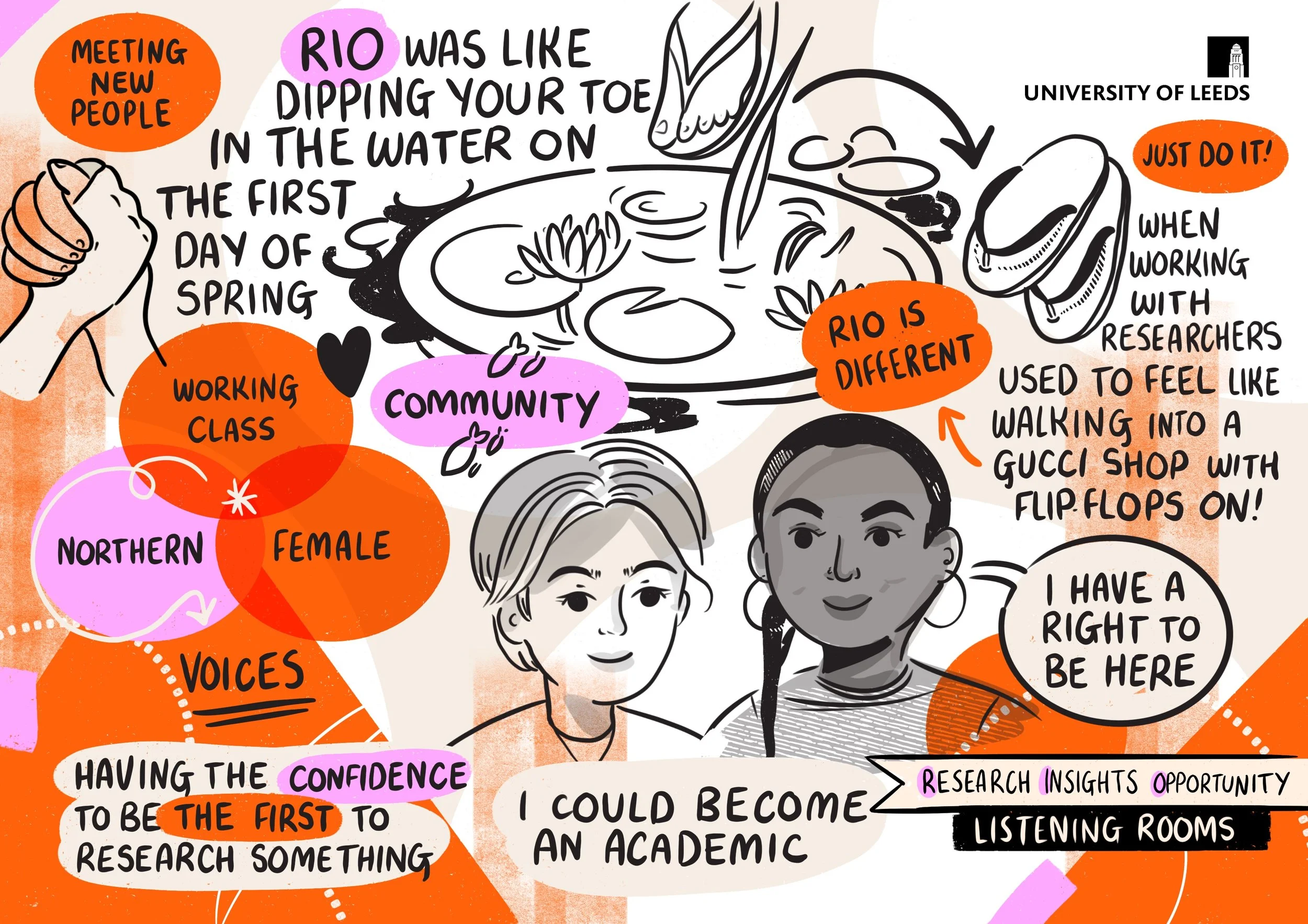
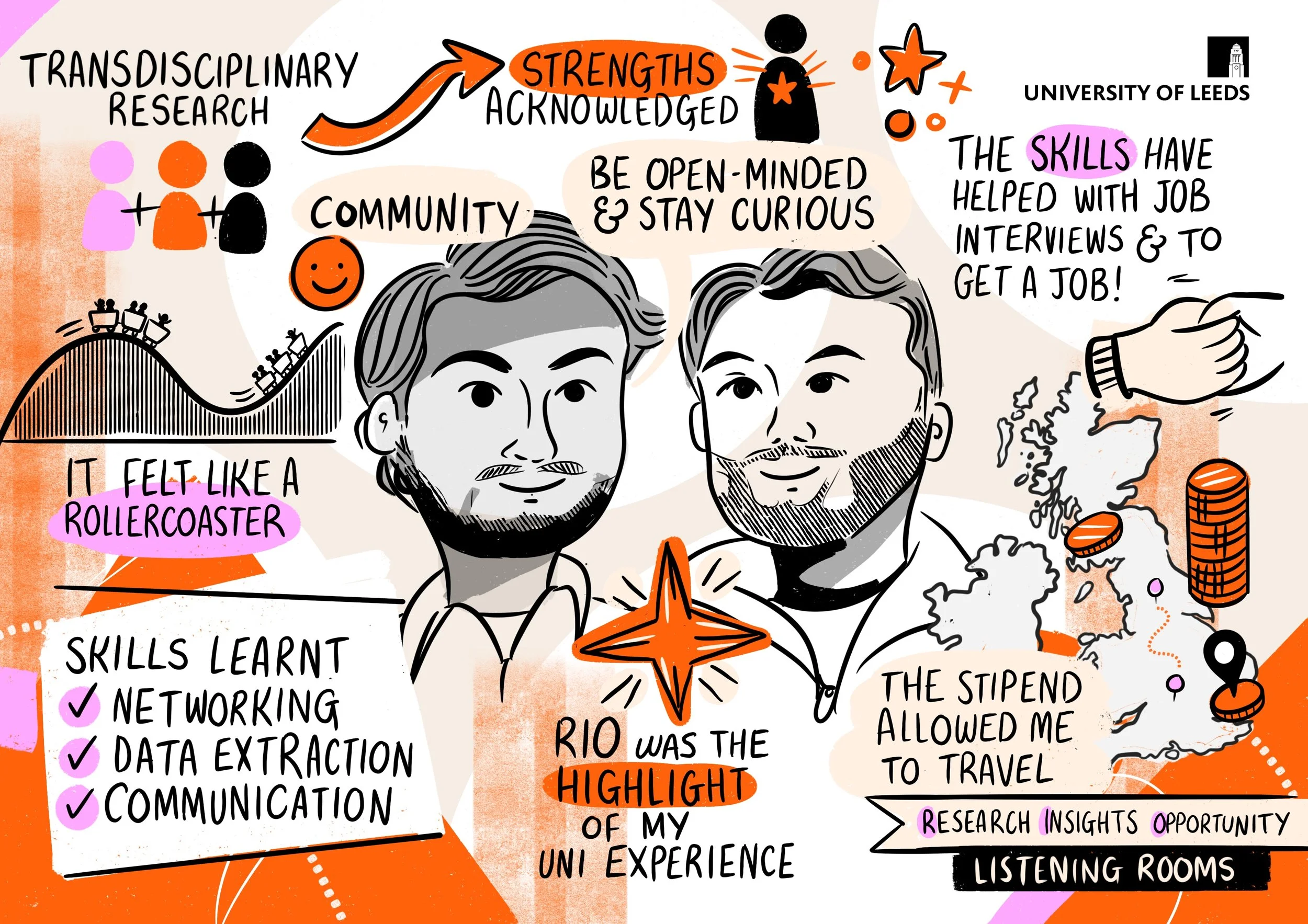
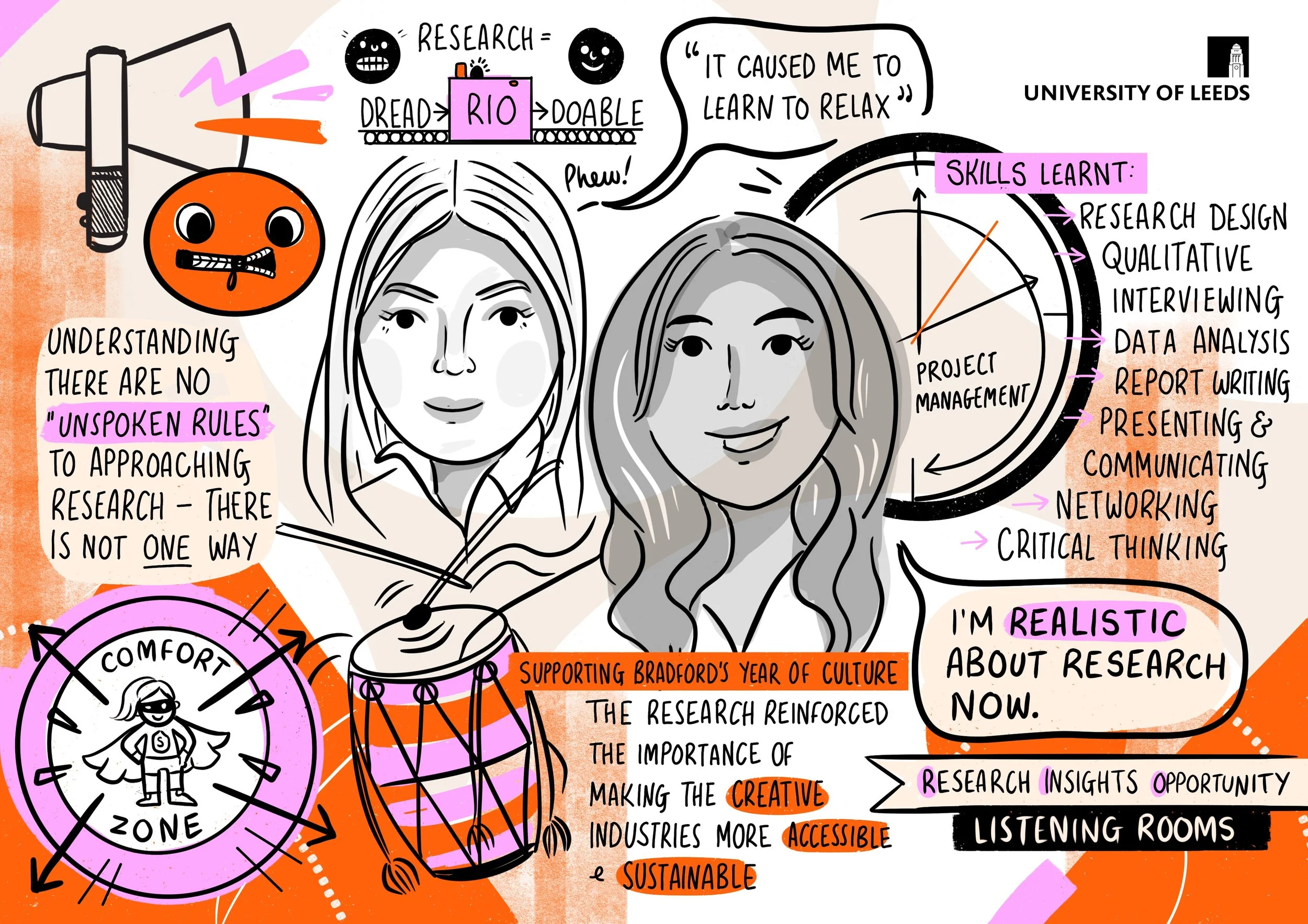
While Dr Alex spoke with the students, Chloe took visual notes in real-time, capturing the students’ portraits and likeness while visually representing key themes, reflections and experiences. These visual notes complemented the discussion by making the conversations more tangible and memorable.
Stage three: Turning insights into outputs
Following the sessions, we incorporated additional written feedback from students who couldn't attend in person. We collated and translated our findings into multiple outputs for the team, including a written report summarising key findings and sharing student quotes for stakeholders who want thorough detail.
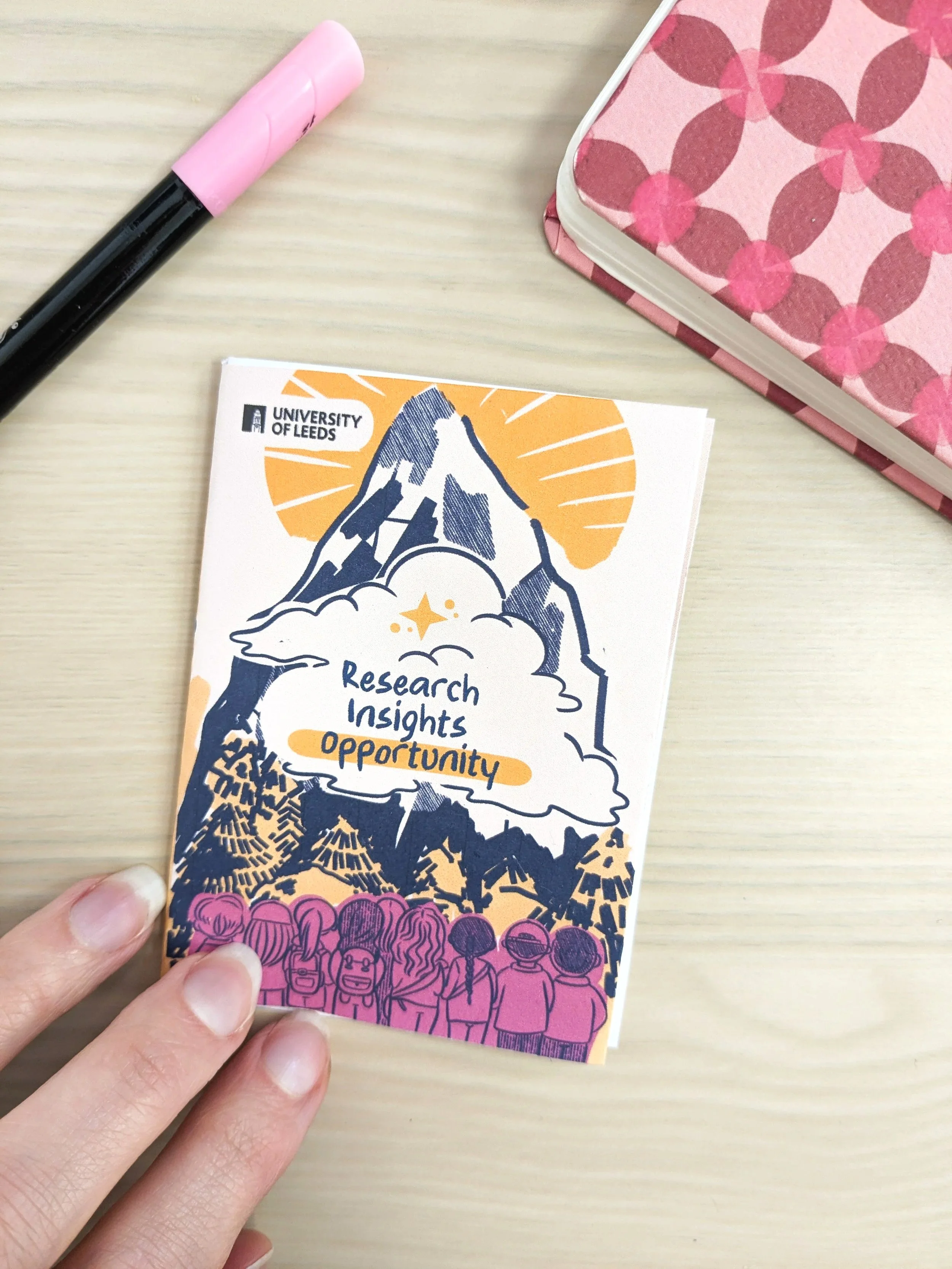
We also developed the visual notes into an illustrated zine that could be shared with stakeholders, participants and prospective future cohorts.
After all, it’s important to remember that different audiences need different outputs and levels of detail!
Why produce a zine?
A zine is a short, highly visual publication designed to communicate ideas in an accessible and engaging way.
We created an eight-page illustrated zine to tell the RIO story through participant experiences, key insights and accessible visuals.
By combining participant voices with illustration, the zine became a shareable and engaging way to communicate the programme’s impact.
What we learned
Conversations are data
“Numbers have faces, statistics have stories.”
Sometimes the most valuable insights emerge through conversation rather than formal evaluation metrics or even over-scripted question sets. Creating safe spaces for people to speak freely and openly while engaging them in a dynamic conversation can unearth rich data.
Visual outputs increase accessibility
When it comes to how you share your research or evaluation, one size doesn’t fit all.
Different audiences and stakeholders engage differently with visual and narrative formats – don’t assume that what works for you is necessarily what works for everyone else.
As researchers, we’re quite used to and very good at reading walls of text, but that doesn’t mean we always enjoy it, and they’re not for everyone.
Participants want to feel heard
Evaluation isn’t just about collecting feedback. The best forms of evaluation create opportunities for reflection and dialogue to not only measure effectiveness but also apply insights and learnings into the next project.
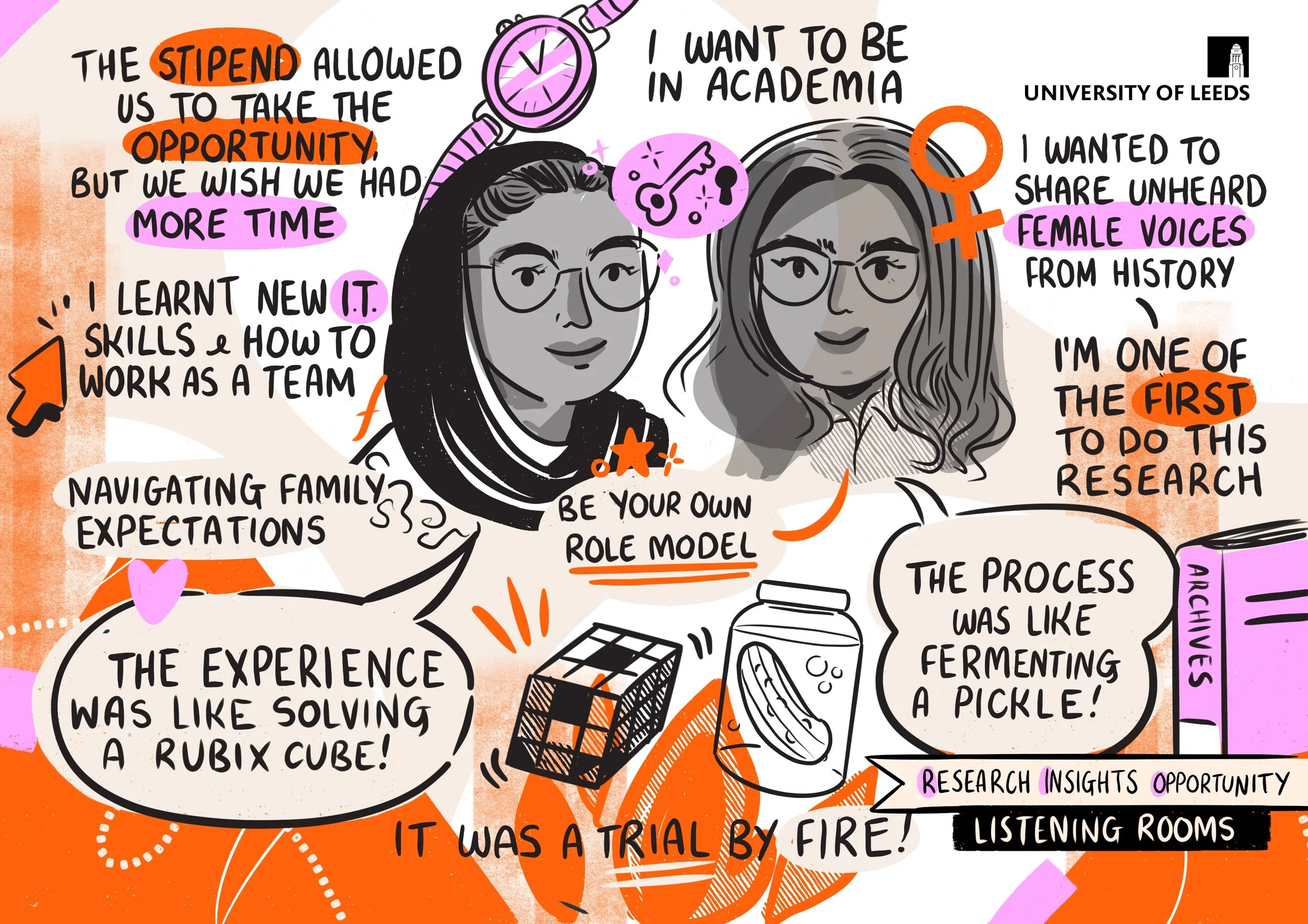
Above: a visual note illustration captured by Buttercrumble.
Outcomes and impact
Our collaboration with the team behind RIO generated a richer understanding of student experiences and provided an independent perspective on participant reflections and suggestions through the use of an experienced, external researcher and facilitator.
We also produced a range of evidence for future programme development to both continue and hopefully expand RIO to support larger cohorts. These accessible resources also help time-poor stakeholders quickly understand the programme, its value and its potential.
And, just as importantly, we shared students’ voices authentically, from their challenges to the confidence and skills RIO provided them in pursuing their academic aspirations.
The zine provided the RIO team with a resource that can be shared with participants, stakeholders and future cohorts, helping to extend the life of our collaboration beyond the evaluation process.
What could this look like in your project?
Although Dr Alex has a passion for working with students and capturing student experience, this approach isn’t limited to student experience programmes.
We’ve used a blend of facilitation, evaluation and visual communication methods to support:
Community engagement projects
Public involvement activities
Patient and participant workshops
Stakeholder consultations
Research culture projects
Widening participation initiatives
If you’re planning a workshop, engagement activity or evaluation project and would like to explore creative ways of capturing and communicating insights, please get in touch – we’d love to chat!