
Please note: this article was originally published in Spanish in Autumn 2026 for Petit Style Magazine. Written by Buttercrumble’s Abigail Baldwin.
I recently visited Copenhagen and, as one of the world’s design capitals, it’s full of inspiration! Their Scandinavian design focuses on minimalism and functionality. It originated in the early 20th century and flourished across the Nordic countries (Denmark, Finland, Norway, Sweden, and Iceland). It’s now loved worldwide.
During my visit, I learnt how much the Danes love their chairs (a lot) and how simple design can be beautiful. It’s also a city that celebrates fairy tales (thanks to writer, Hans Christian Anderson) and a young-at-heart spirit. When designing for children, you can learn a lot from this magical place.
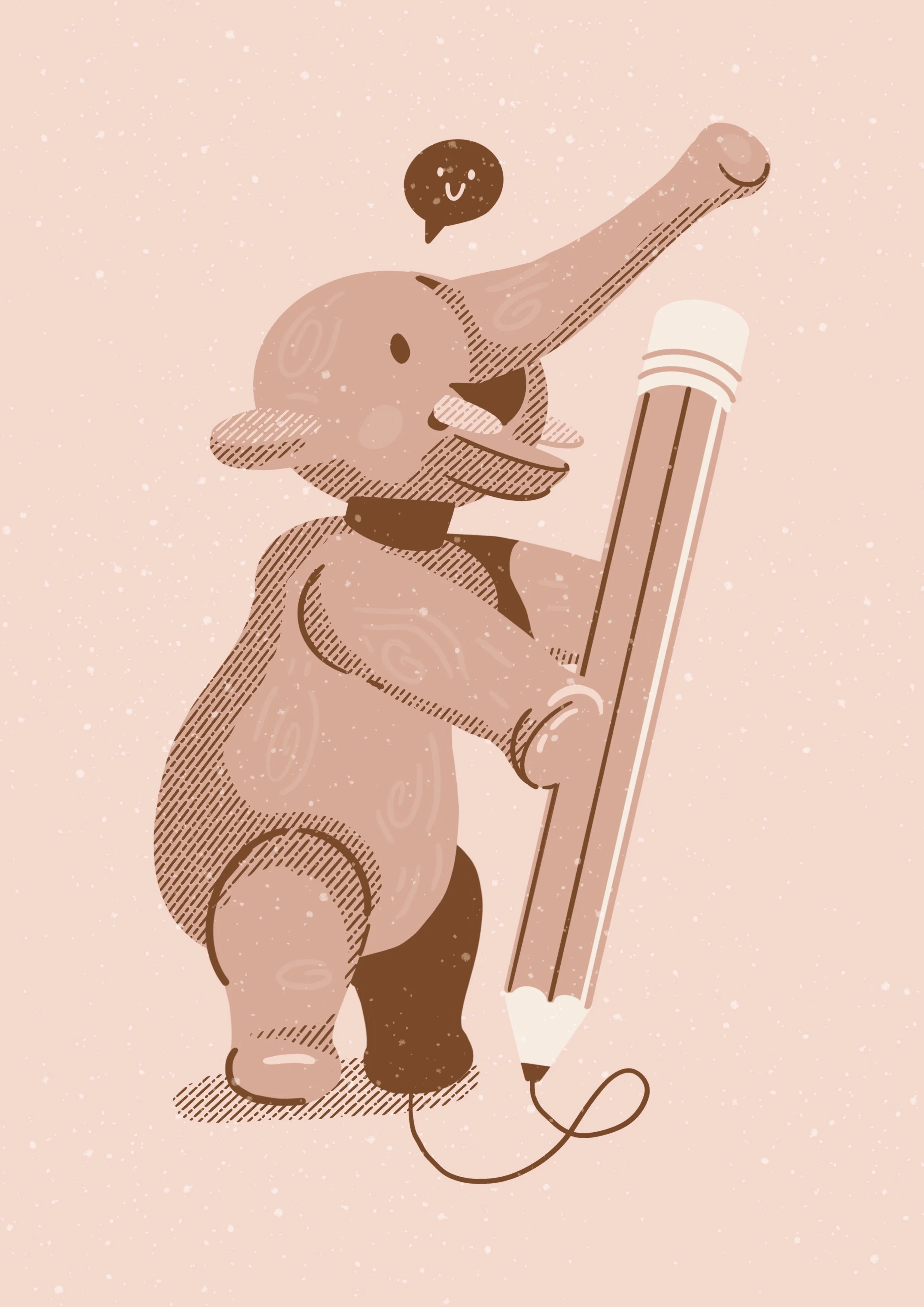
Illustration by Buttercrumble
There’s one prolific Danish designer who’s my favourite: Kay Bojesen (1886–1958). He was originally a silversmith, educated by the world-famous Georg Jensen, but then turned his hand to wooden toy animals. In 1922, he made the first wooden animals for a toy competition, and continued to design new models for the rest of his life.
Before World War II, they were simplified yet colourful versions of everyday machines and figures. After the War, he turned to stylistic exotic animals. Think of zebras, puffins, elephants, bears, hippopotamuses, and monkeys. All crafted from raw wood. He looked at functionalism, simple lines, and quality. Bojesen wanted to produce well-designed everyday objects.
Bojesen believed that “lines should smile”, and his empathy sparked the imagination of children and adults alike. This was his golden rule for toys and figures. They had to be round, soft, sturdy, and pleasant to hold, rather than cold and stiff. It’s ergonomics for comfort!
Bojesen’s approach still feels remarkably relevant today. His timeless objects still look gorgeous in homes today. Instead of chasing trends or overcomplicating an idea, he focused on personality, simplicity, and emotional connection. His animals weren’t exact replicas of real creatures, yet they captured something more important: a sense of character and joy.
When designing for children, there is a valuable lesson in this. The most engaging experiences often come from stripping things back to their essence, using thoughtful details, intuitive forms, and a touch of playfulness to spark imagination. Good design doesn’t need to shout for attention. Like Bojesen’s smiling lines, it can quietly invite curiosity, creativity, and delight.
At Buttercrumble, we love designing for the young-at-heart. Please do get in touch, and let’s see how we can help.
